AI is here to stay, but the real edge comes from knowing how to use it to enhance our work, not do the thinking for us.
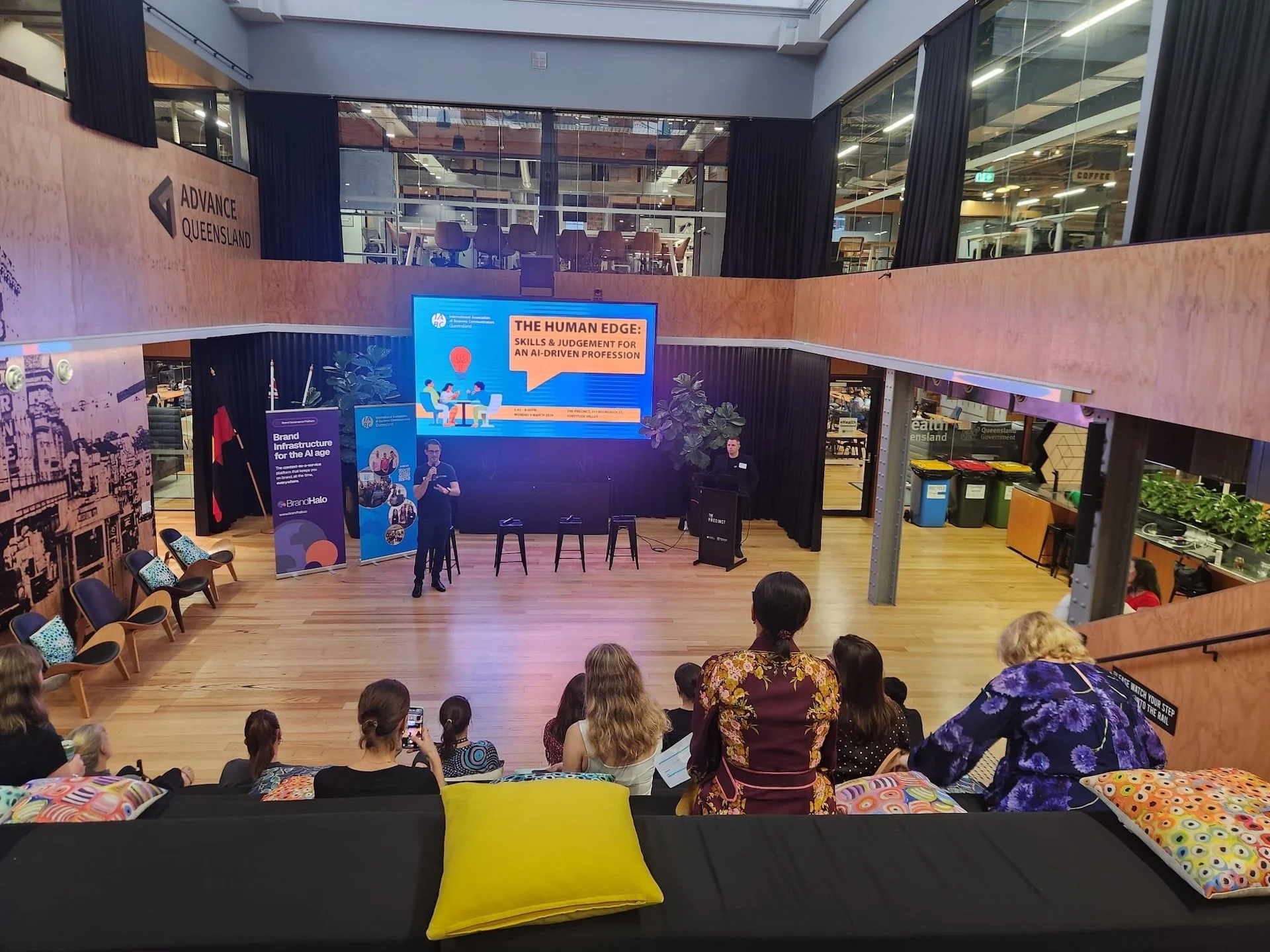
This is the main theme that emerged from IABC Queensland’s recent panel event, The Human Edge: Skills + Judgement for an AI-Driven Profession. We brought the Brisbane communications community together to share ideas, challenge our thinking, and learn from one another.
With special thanks to our fabulous panelists, Amanda Newbery, Dan Shaw, Emma Hall and Kirsten MacGregor, we grappled with how to define the human edge - where do comms pros add the most value so we can work with AI without outsourcing critical thinking?
We’ve rounded up our top 10 takeaways from the event.
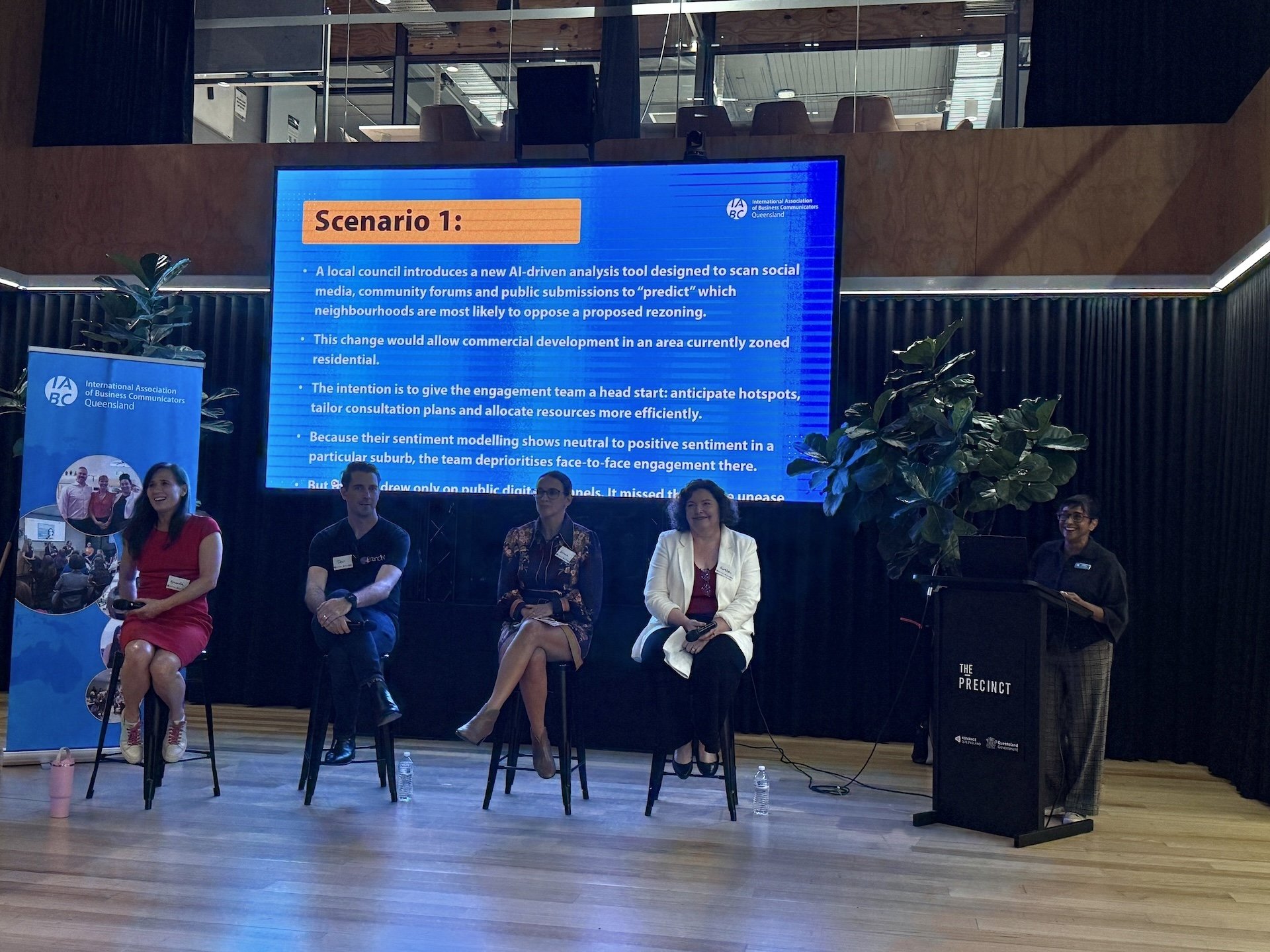
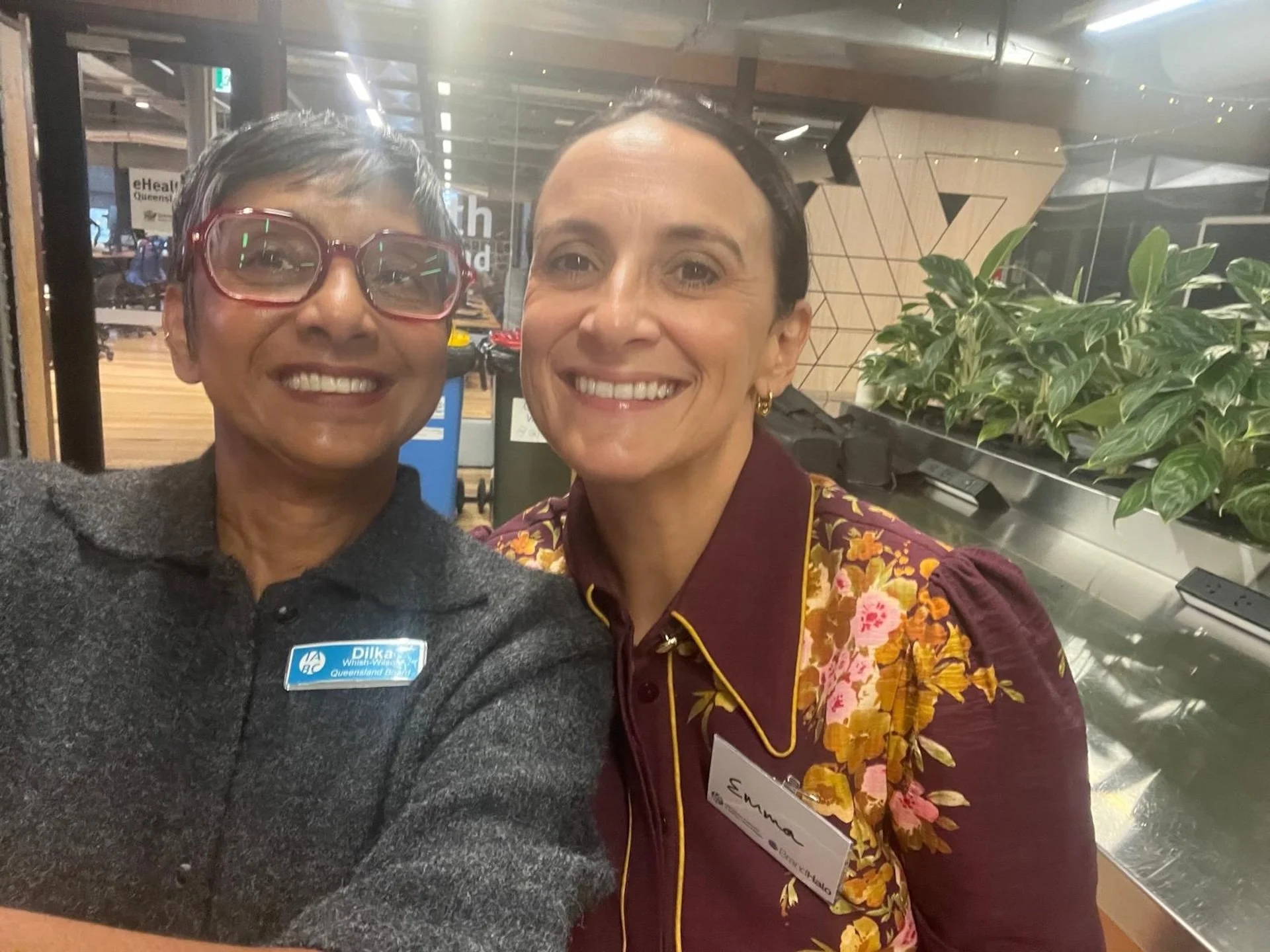
From L–R: Panellists Amanda Newbery, Dan Shaw, Emma Hall and Kirsten MacGregor with event host and IABC Queensland President, Dilka Whish-Wilson
1. AI is powerful, but still average
AI can generate content quickly, but its outputs are often generic, lacking nuance, depth and originality.
2. Human judgement remains essential
Just because AI can produce something doesn’t mean it should be used. Critical thinking and professional and ethical judgements are essential when deciding whether to use AI outputs.
3. AI should support work, not replace thinking
AI tools can summarise information or draft ideas, but human judgement matters: read the full material, check facts, and apply context.
4. Proofreading and accountability are non-negotiable
Any AI-generated content must be reviewed and verified to ensure it’s accurate, appropriate, and fit for purpose.
5. Curiosity is the real competitive advantage
Asking better questions, exploring different perspectives and remaining curious will separate strong professionals from those relying on AI shortcuts.
6. The skill of asking the right questions is becoming critical
Even in an AI-driven environment, knowing what to ask and how to probe deeper is the most important part of delivering quality insights and outcomes.
7. AI can’t replace human empathy or intuition
AI can't read a room, sense emotions, or interpret complex human dynamics in the way people can.
8. Outliers matter and AI often misses them
AI tends to focus on patterns and averages, but in areas like community engagement, a single voice or unexpected perspective can shift the entire conversation.
9. Great communication starts with listening
While AI accelerates production, meaningful communication requires slowing down, listening carefully, and understanding what audiences actually need to hear.
10. The future belongs to professionals who combine both
The strongest practitioners will use AI as a tool while doubling down on human strengths like empathy, judgement, curiosity and relationship-building.



Over to you…
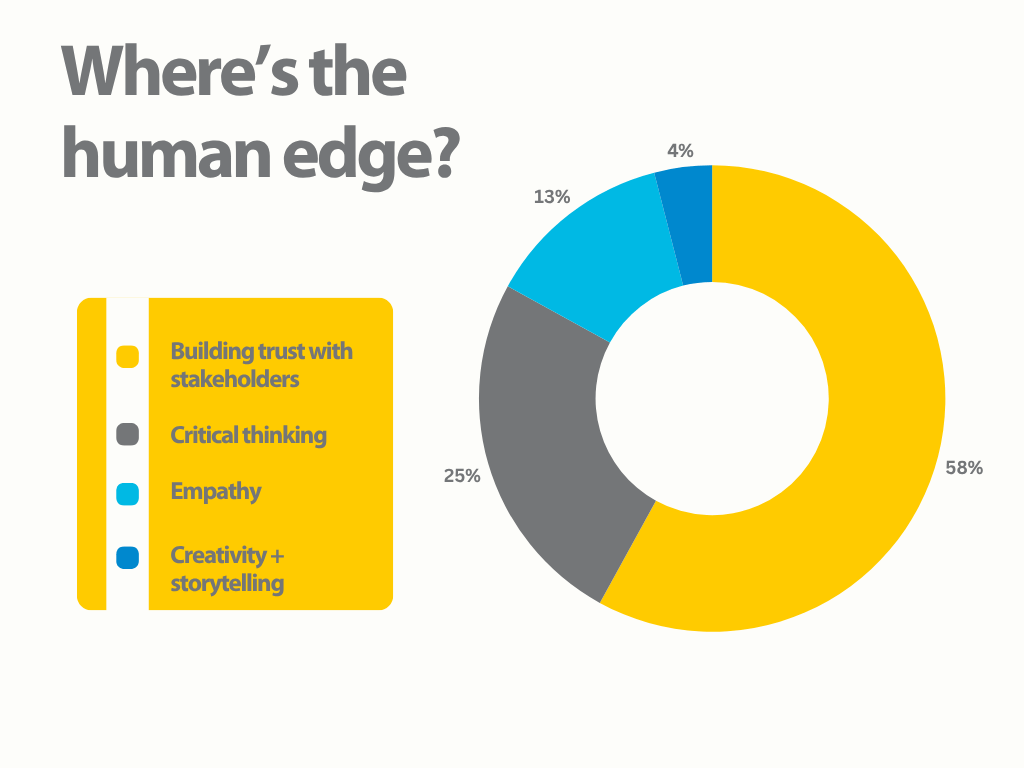
We asked our LinkedIn community for their thoughts. With AI transforming communication, where do humans have the biggest edge?
Most people chose building trust with stakeholders (58%), with critical thinking coming in second, taking 25% of the vote. Empathy was the third-most popular choice (13%), while just 4% of respondents chose creativity and storytelling.
Final thoughts from our panellists:
Kirsten: Is it humanity’s time to shine?
Emma: Challenge yourself to feel uncomfortable, that’s how you grow
Dan: Slow down to speed up - context matters.
Amanda: Focus on being human and invest in the skills needed to work well with others. It will be the difference.