AI, deepfakes and reputation: what communicators need to know
Deepfakes are no longer a future problem. They’re already here, they’re becoming easier to create and increasingly difficult to identify.
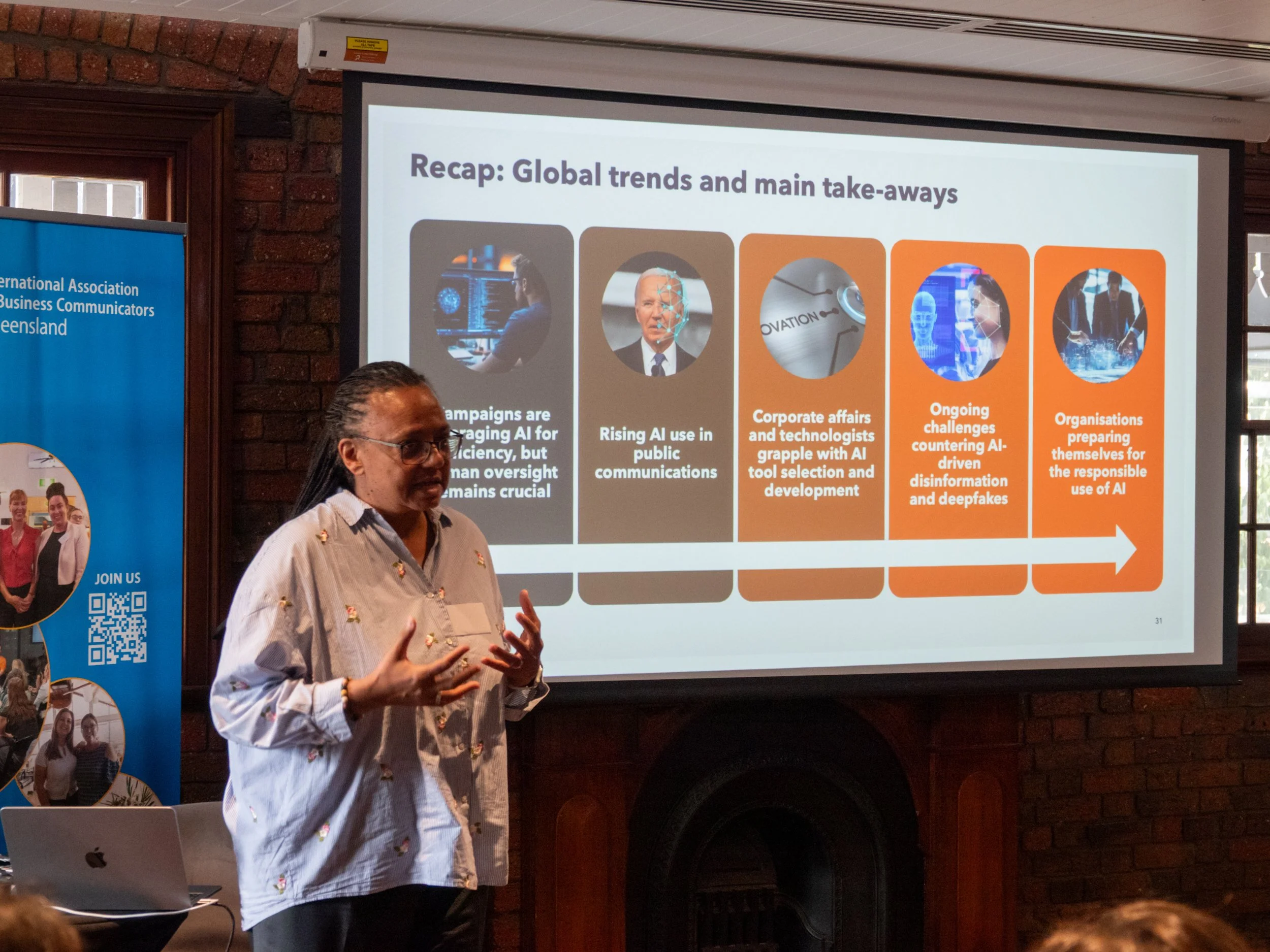
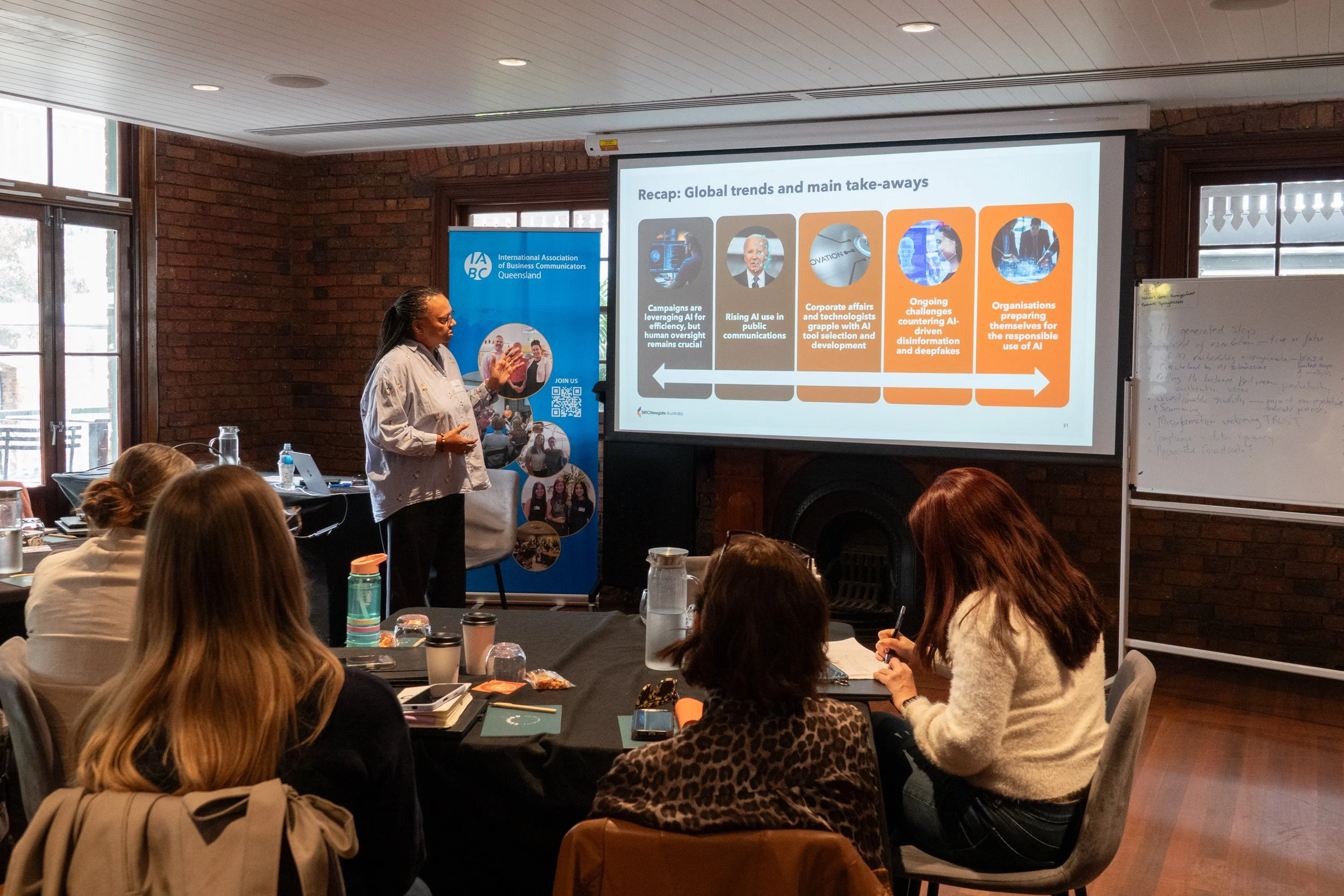
That was one of the key messages from IABC Queensland’s recent AI, Deepfakes & Reputation masterclass, led by Feyi Akindoyeni from SEC Newgate’s Melbourne office.
With more than 20 years’ experience in strategic communications and a career spent working on some of Australia’s most challenging briefs, Feyi took participants into the rapidly evolving world of AI-generated content and the reputational risks it creates for organisations and their leaders.
The session combined real-world examples with practical advice, exploring how communicators can prepare for a world where seeing, and hearing, can no longer necessarily be believing.
Just how easy is it to create a deepfake?
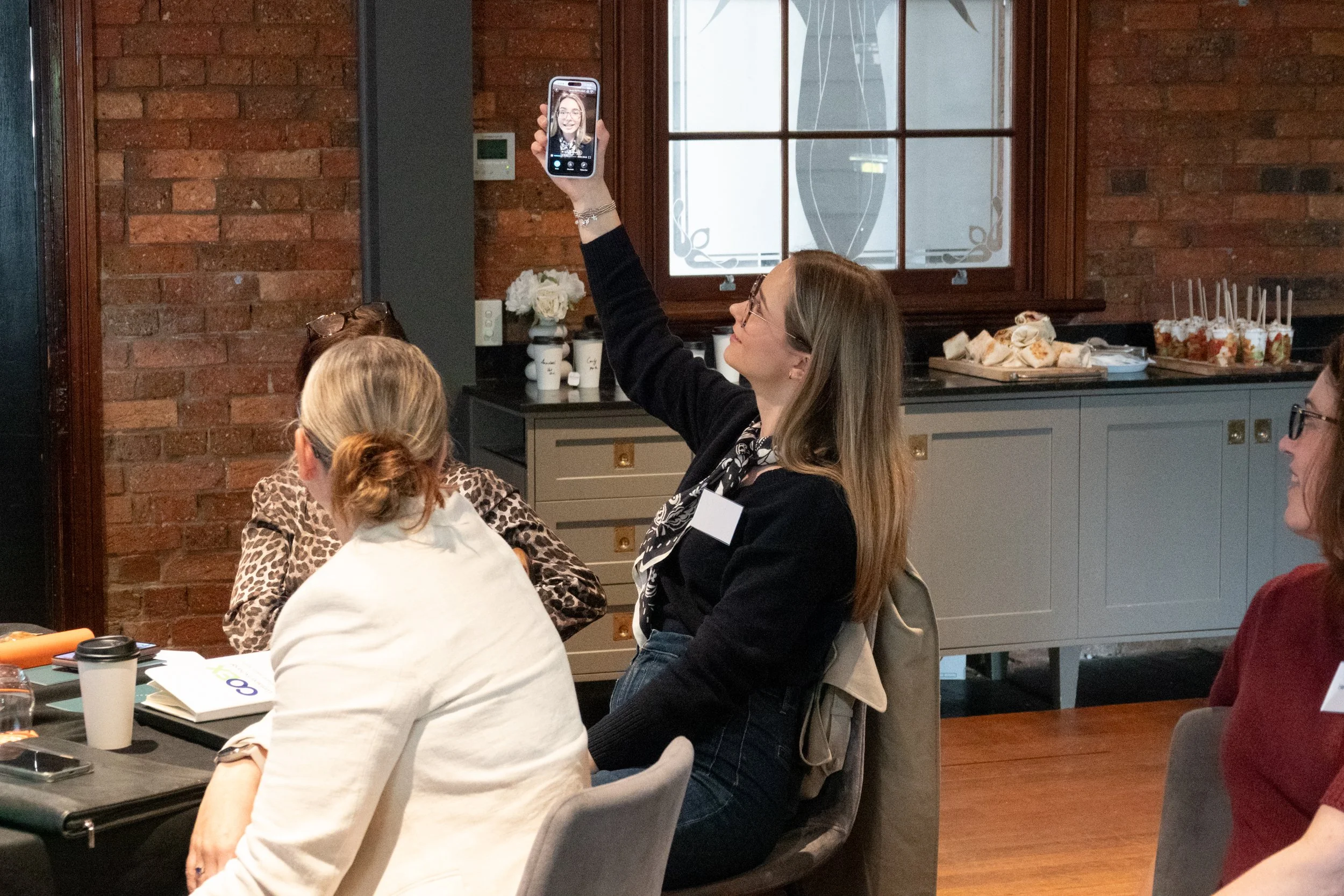
One of the most eye-opening parts of the session was seeing how little it can take to create convincing fake content.
Participants explored some of the tools available to create, identify and verify digital content, as well as the steps to take when a potential deepfake lands in your inbox or begins circulating online.
The discussion went beyond detection to consider the bigger organisational picture: crisis response, digital identity, verification processes and the role communicators can play in building resilience before an incident occurs.
The message was clear: deepfakes aren’t simply an IT issue. They are a communication, reputation and business risk.



Six takeaways for communicators
1. Deepfakes aren’t just an IT problem
Managing the risk requires collaboration. Communications, IT, Legal, HR and organisational leaders all have a role to play in preparing for and responding to manipulated content.
2. You can’t rely on technology to spot every fake
As AI becomes more sophisticated, detection becomes harder. Sometimes one of the best defences is also one of the simplest: stop, question and verify. If something doesn’t seem right, confirm it through another trusted channel before acting or sharing.
3. The first few hours matter
False content can spread quickly. Organisations need to know who will be involved in a response, how decisions will be made and what channels will be used to communicate. Having a plan, and practising it, can save valuable time during an incident.
4. Your leaders can be targets
Publicly available photos, videos and voice recordings can potentially be used to create convincing impersonations. Organisations should consider how they manage the digital identities of their leaders and how audiences can identify official, trusted content.
5. Make it OK to question things
Technology is only part of the solution. Building a culture where people feel comfortable saying, “This doesn’t seem right” and checking before they act can provide an important additional layer of protection.
6. If it happens, communicate
When misinformation begins to spread, silence can leave an information vacuum. Clear, timely and factual communication can help audiences understand what has happened, where to find verified information and what they should do next.
Prepare before you need to respond
Perhaps the biggest takeaway from the session was that organisations may not be able to prevent deepfakes about their people or brand from being created — but they can prepare for the potential consequences.
Have a plan. Know how you’ll verify content. Establish trusted channels. Practise your response. And don’t wait for a deepfake crisis to start the conversation.
A huge thank you to Feyi for sharing her expertise and making the masterclass practical, interactive and thought-provoking, and to everyone who joined us for the session.
Note: This article was created with the help of ChatGPT.